

In this guideDry season and rainy season
Dry season and rainy season
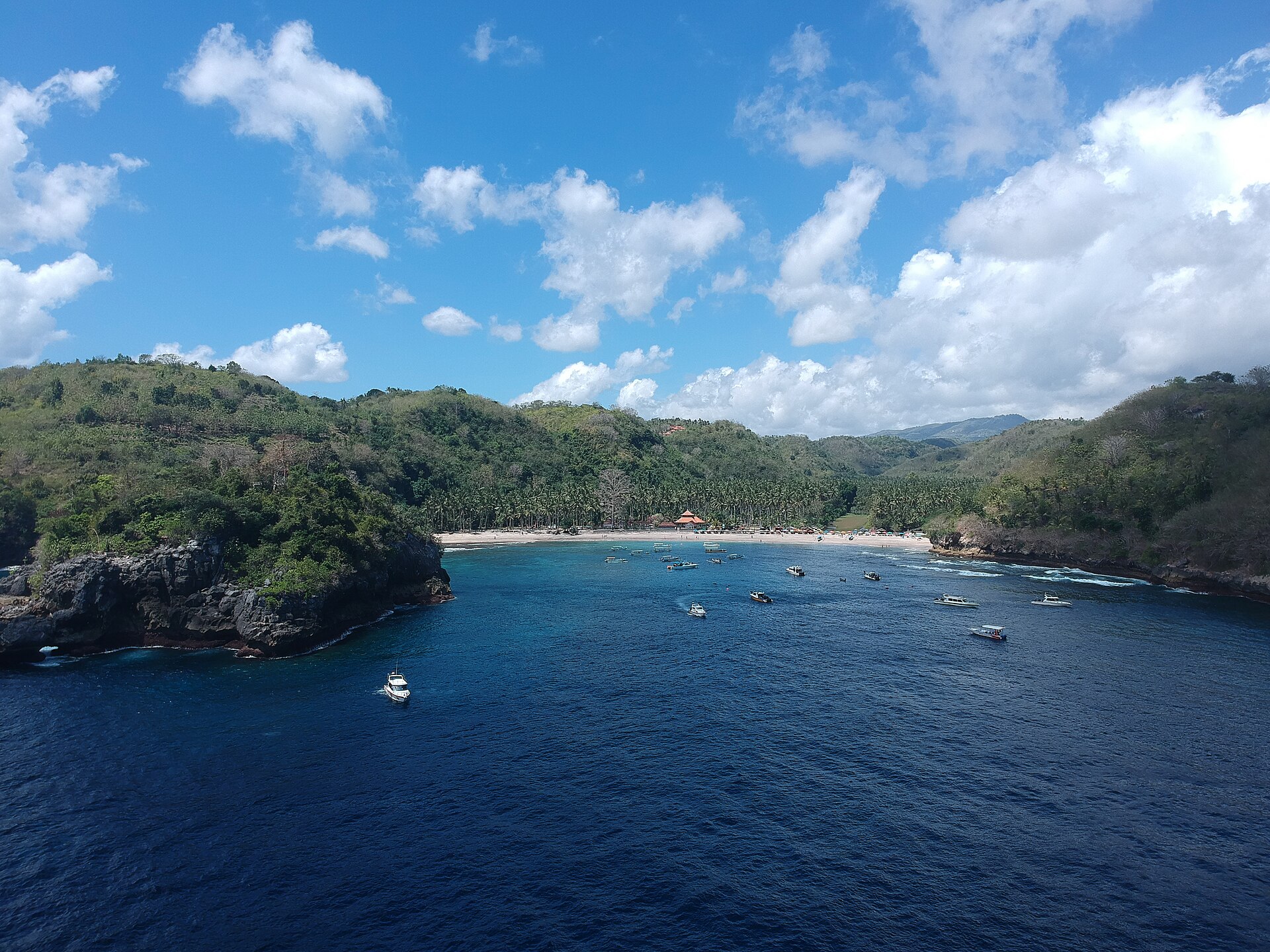
May to October is the drier half of the year, and June to September has the least rain. November to April is wetter, with the heaviest rain from December to February. It’s warm all year: average highs at Bali’s airport stay around 29 to 32°C.
The rainy season doesn’t start on a fixed date. In September 2026, the Bali climate station of BMKG, Indonesia’s weather agency, forecast that the 2026/2027 rainy season would start late, in December 2026, for the Klungkung and Nusa Penida zones, with the peak in February 2027 for most of Bali.
Month by month
Rainfall below is the 1991 to 2020 average for Denpasar’s Ngurah Rai airport, the nearest long-term record. Nusa Penida’s own rainfall will differ, so treat it as a guide to the season.
Rough sea and the boat crossing
A dry day on land doesn’t mean a calm crossing. In June 2023, BMKG explained that steady east to south-east winds from Australia during the dry season build high waves around Bali, with the dry-season peak in July and August. That week it forecast waves up to 4 metres in the Bali and Lombok straits.
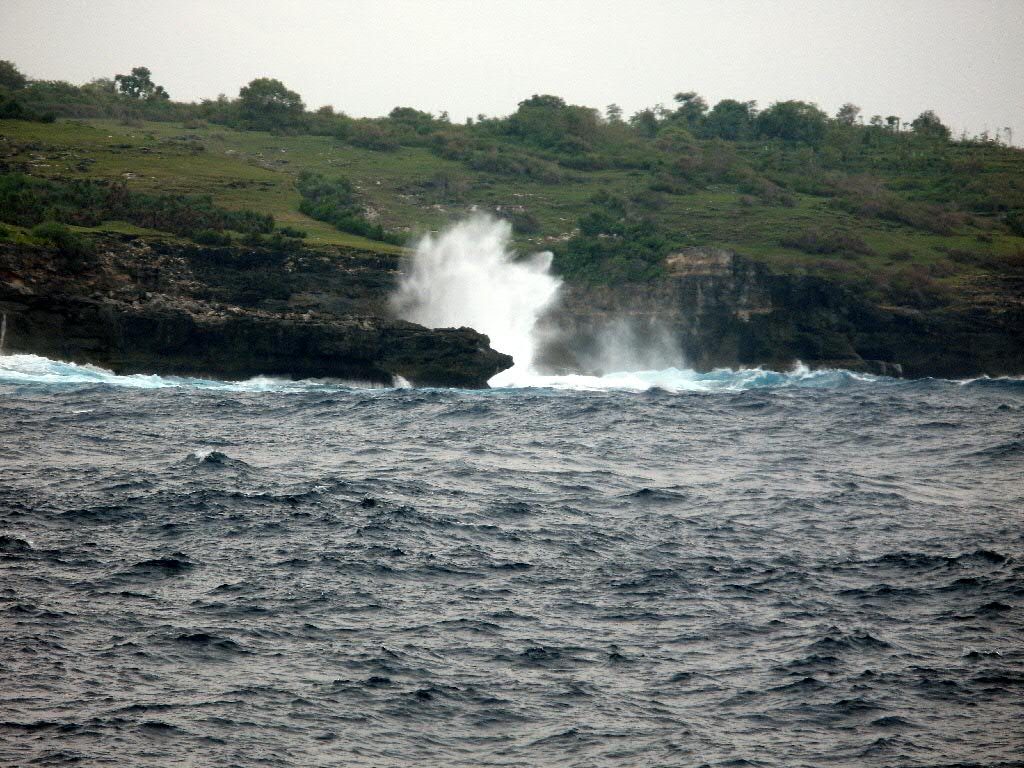
The wet season has its own problems. Researchers studying mantas around the island found that monsoon weather in December and January limited their trips to the dive sites.
Whatever the month, check the BMKG forecast for Nusa Penida harbour a day or two before your boat from Sanur, and ask the operator if the sailing is running.
Mantas and mola mola
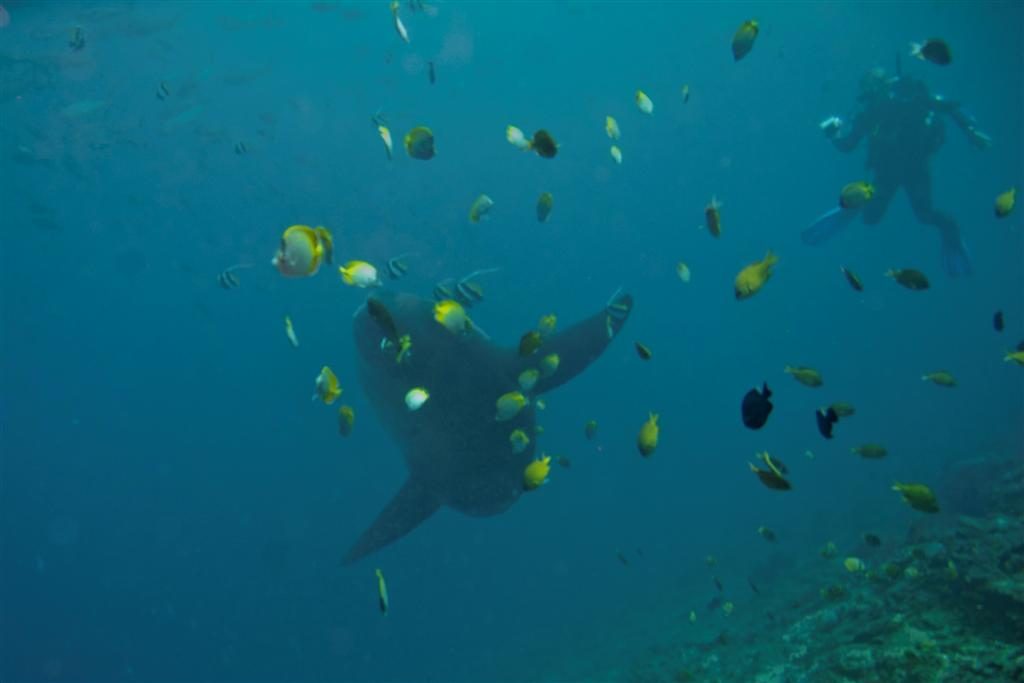
Mantas are around all year. A 2019 study of the Nusa Penida Marine Protected Area found reef mantas at Manta Point and Manta Bay year-round, with sightings at Manta Point roughly doubling in May during courtship. No month guarantees a sighting.
Mola mola are a diving trip, from about July to October. Blaise Jaeger’s guide to the sunfish describes them rising from deep water during the cold upwelling season, usually at 20 to 40 metres, with Crystal Bay the best-known site. Water at depth can drop to 16 to 22°C, so divers need a thicker wetsuit. Snorkelers very rarely see them.
Nyepi and Balinese holy days
Nyepi, the Day of Silence, falls on Monday 8 March 2027. Bali and Nusa Penida shut down for 24 hours: no boats, no shops or restaurants, no going outside and no flights at Bali’s airport. Blaise Jaeger’s Nusa Penida guide says boats may also stop on the afternoon of 7 March. If you’re on the island, book a hotel that provides meals and stock up the day before. Don’t plan to arrive or leave between 7 and 9 March.
Idul Fitri follows on 10 and 11 March 2027, with collective leave days on 9, 12 and 15 March, so expect busier boats and Bali roads that week.
Galungan falls on 13 January and 11 August 2027, with Kuningan ten days later on 23 January and 21 August. There’s no Galungan in late 2026. Expect temple ceremonies and decorated bamboo poles along the roads. Give way to processions.
Busy months
July and August are usually the busiest. Several holidays overlap: the Indonesian school year starts in mid-July (13 July in 2026), Western Australian schools break from 3 to 18 July 2027, and many European travellers come in their summer. Christmas to New Year is busy too, including Indonesian school holidays.
For quieter viewpoints, choose May, June, September or October, or stay overnight and start early.
Visiting in wetter months
You can still have a good trip from November to April. Stay at least two nights so one wet morning doesn’t cost you the island, and keep snorkeling for the day with the best forecast.
On a rainy day, skip steep beach paths such as Kelingking’s: wet earth and rock make them slippery. Visit Goa Giri Putri cave temple instead, have a long lunch, or save the viewpoints for when the rain clears.
Before departure
- Pick your month, then avoid Nyepi week and the holiday peaks if you can.
- Leave separate days for land tours and snorkeling. The 3D2N itinerary gives you one full day between boats.
- Check the weather and the marine forecast a day or two before, then confirm the sailing with your boat provider.
Continue planning
More travel guides
Research notes
Sources and verification
Check current boat times, prices and conditions before you go.
- Bali Post on BMKG's 2026/2027 rainy season forecast for Bali Source checked Oct 13, 2026
- BMKG Bali season terminology Source checked Oct 13, 2026
- BMKG marine forecast for Nusa Penida Harbour Source checked Oct 13, 2026
- ANTARA Bali on BMKG's dry-season easterly winds and high waves (June 2023) Source checked Oct 13, 2026
- Denpasar climate table, 1991 to 2020 normals (Wikipedia) Source checked Oct 13, 2026
- Indonesian State Secretariat on the 2027 national holidays (SKB 3 Menteri) Source checked Oct 13, 2026
- Kalender Bali, January 2027 holy days (Galungan and Kuningan) Source checked Oct 13, 2026
- Kalender Bali, August 2027 holy days (Galungan and Kuningan) Source checked Oct 13, 2026
- Nusa Penida celebrations and Nyepi guide by Blaise Jaeger Source checked Oct 13, 2026
- Mola mola season around Nusa Penida by Blaise Jaeger Source checked Oct 13, 2026
- Germanov et al. (2019), reef manta rays in the Nusa Penida Marine Protected Area Source checked Oct 13, 2026
- RCTI+ on the start of the 2026/2027 Indonesian school year Source checked Oct 13, 2026
- Western Australia Department of Education school term dates Source checked Oct 13, 2026