
Attraction
Goa Giri Putri Cave Temple, Nusa Penida: Visitor Guide
 By Made Surya
Last edited:
Facts reviewed:
In this guideA temple inside a cave
A temple inside a cave
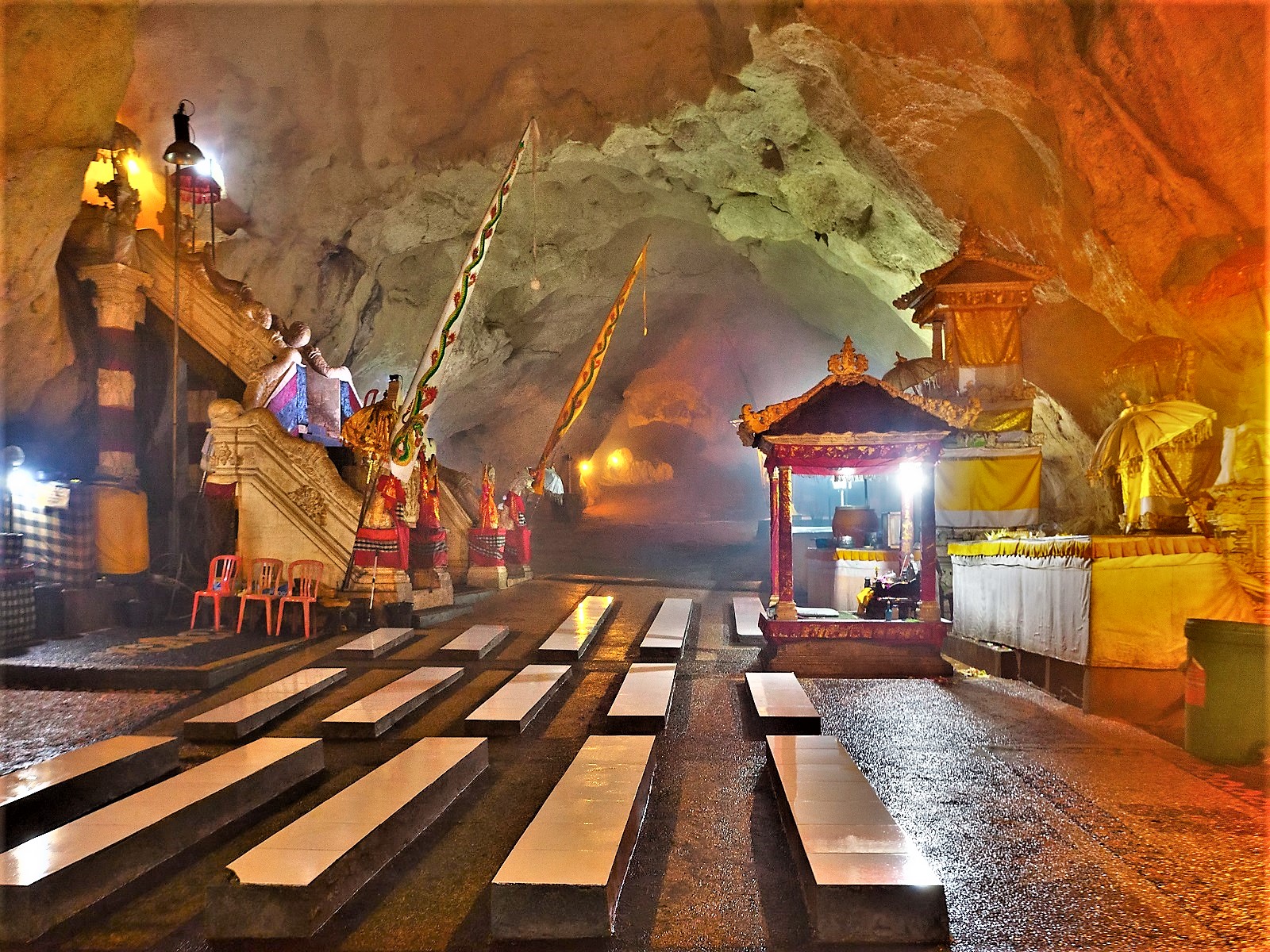
Goa Giri Putri is a working Hindu temple inside one of Nusa Penida’s largest caves. You climb a stairway from the road, crouch through a gap in the rock, then stand up in a chamber big enough for hundreds of worshippers, with shrines, offerings and benches along the cave floor.
The temple is dedicated to Hyang Giri Putri, a form of the goddess Parwati. “Giri” means hill and “putri” means daughter or princess. Suana’s customary village (desa adat) manages the temple, and priests from three local banjar take turns leading prayers, according to a 2023 study from UHN I Gusti Bagus Sugriwa in Denpasar.
Getting there
The cave is in Karangsari, in Suana village, on the east-coast road south of Sampalan. The World Travel Guy puts it about 15 minutes by road from Sampalan, and Nusapenida.org about 30 minutes by scooter from Toyapakeh.
From the parking area, a flight of stairs climbs the hillside to the cave mouth. Accounts range from about 50 to more than 100 steps. Take it slowly in the heat and bring water, as there’s none to buy inside.
Dress for a temple visit
Wear a sarong and sash, and cover your shoulders. You can rent a sarong at the entrance for a few thousand rupiah, The World Travel Guy reports, but bringing your own is easier if you’ll visit other temples.
Don’t enter while menstruating. The temple’s painted rules sign asks visitors not to come in a state of cuntaka: menstruation, after childbirth, or after a death in the family. It also asks you to dress appropriately and not to carry magical charms. Bali’s 2023 rules for foreign visitors say the same: you may enter a temple’s inner courtyards only to pray, in Balinese dress, and not while menstruating.

The cave entrance
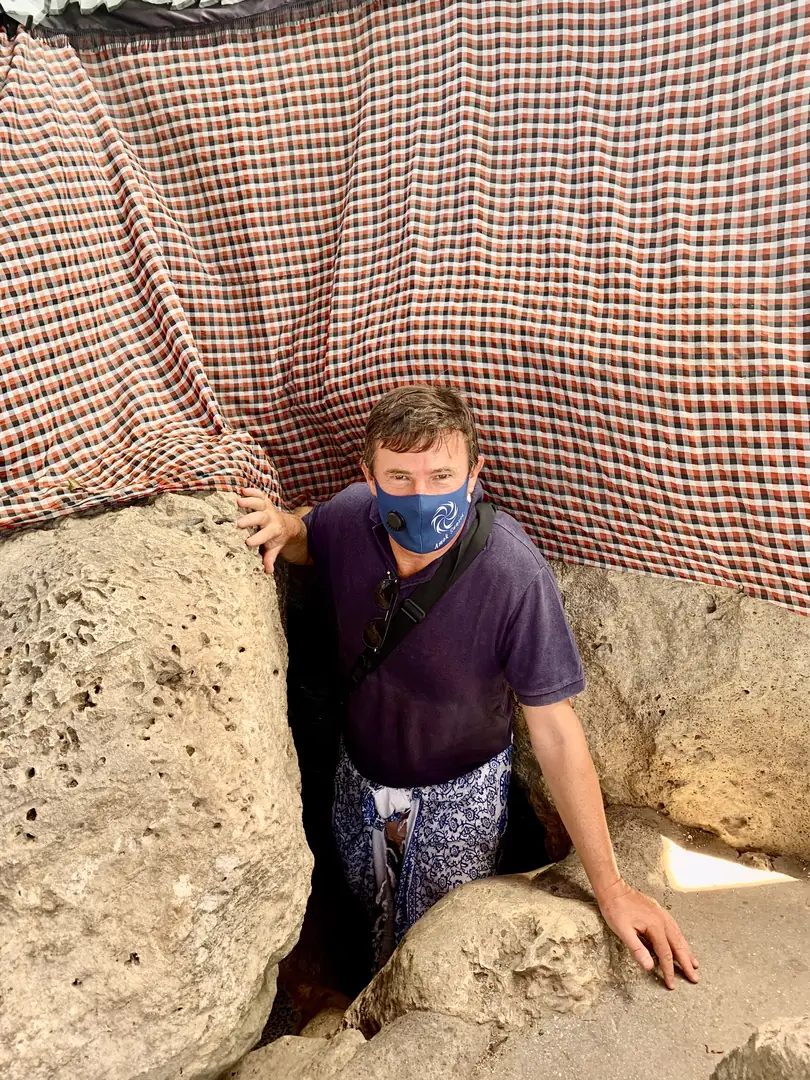
At the top, a priest usually sprinkles holy water on visitors before they go in. The entrance is a narrow hole between boulders, and you’ll need to squat and shuffle for a few steps. With a backpack it’s a tight squeeze, so leave large bags in the car.
Inside, the cave opens out quickly. The World Travel Guy describes it as almost 300 metres long, with lighting installed, bats overhead and some darker sections where a small torch helps. The floor can be damp and uneven. Walk slowly and let worshippers pass.
You don’t have to squeeze back out. Since 2006 an exit at the western end has led down a stairway to the road and parking area, which keeps people moving one way through the cave.
The shrines inside
Nusapenida.org describes six shrines visited in order through the cave, including a holy-water spring dedicated to Dewi Gangga where people take part in melukat (purification). Worshippers also pray to Shiva, Ganesha and Ratu Ayu Mas Melanting, among others.
The last shrine is Chinese. It honours Dewi Kwan Im (Guanyin), and research published in the Kulturistik journal describes Buddhist statues standing beside the Hindu shrines, with the same ritual objects used for both. The 2023 Sugriwa study also names Chinese deities including Ratu Subandar, and notes that people of other faiths come here to pray and meditate.
Photography and ceremonies
Photos are generally allowed, but ask before photographing a priest or worshipper up close, don’t use flash on people praying, and put your camera away if asked. Never step over offerings.
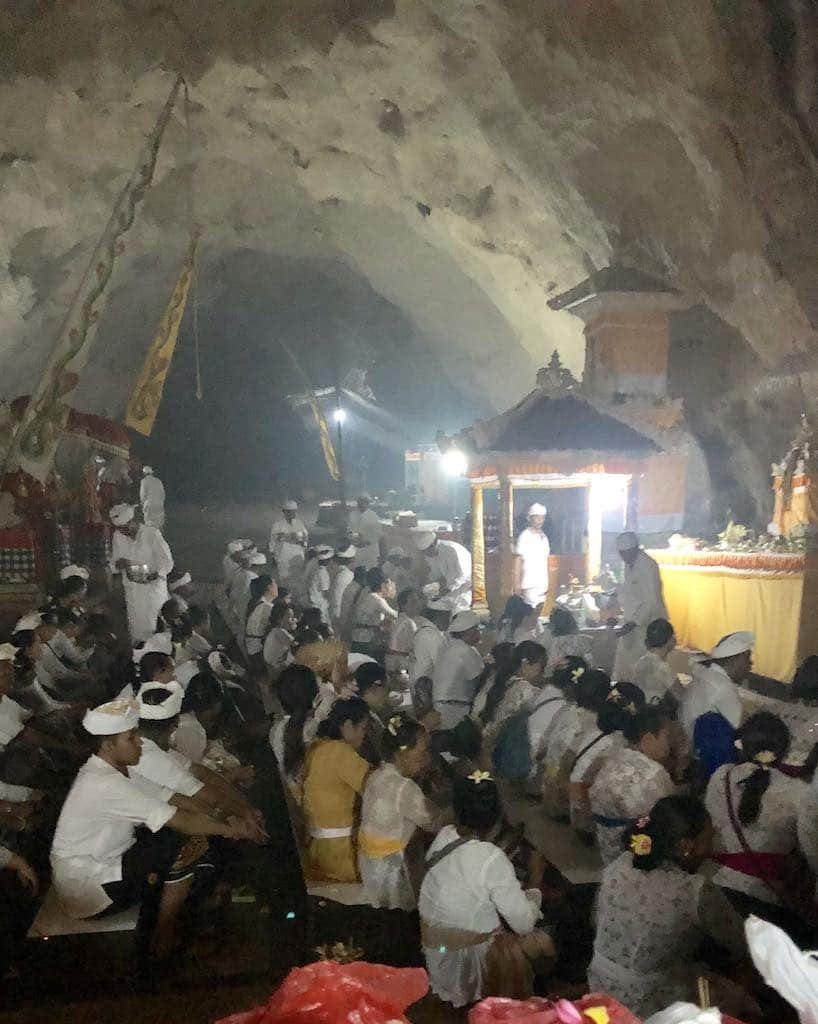
The temple is busiest on full moon (Purnama), new moon (Tilem) and festival days such as Galungan, Kuningan, Saraswati and Pagerwesi, and during the temple’s own anniversary ceremony. It can close to visitors during major ceremonies. If you arrive during one, wait outside or come back later.
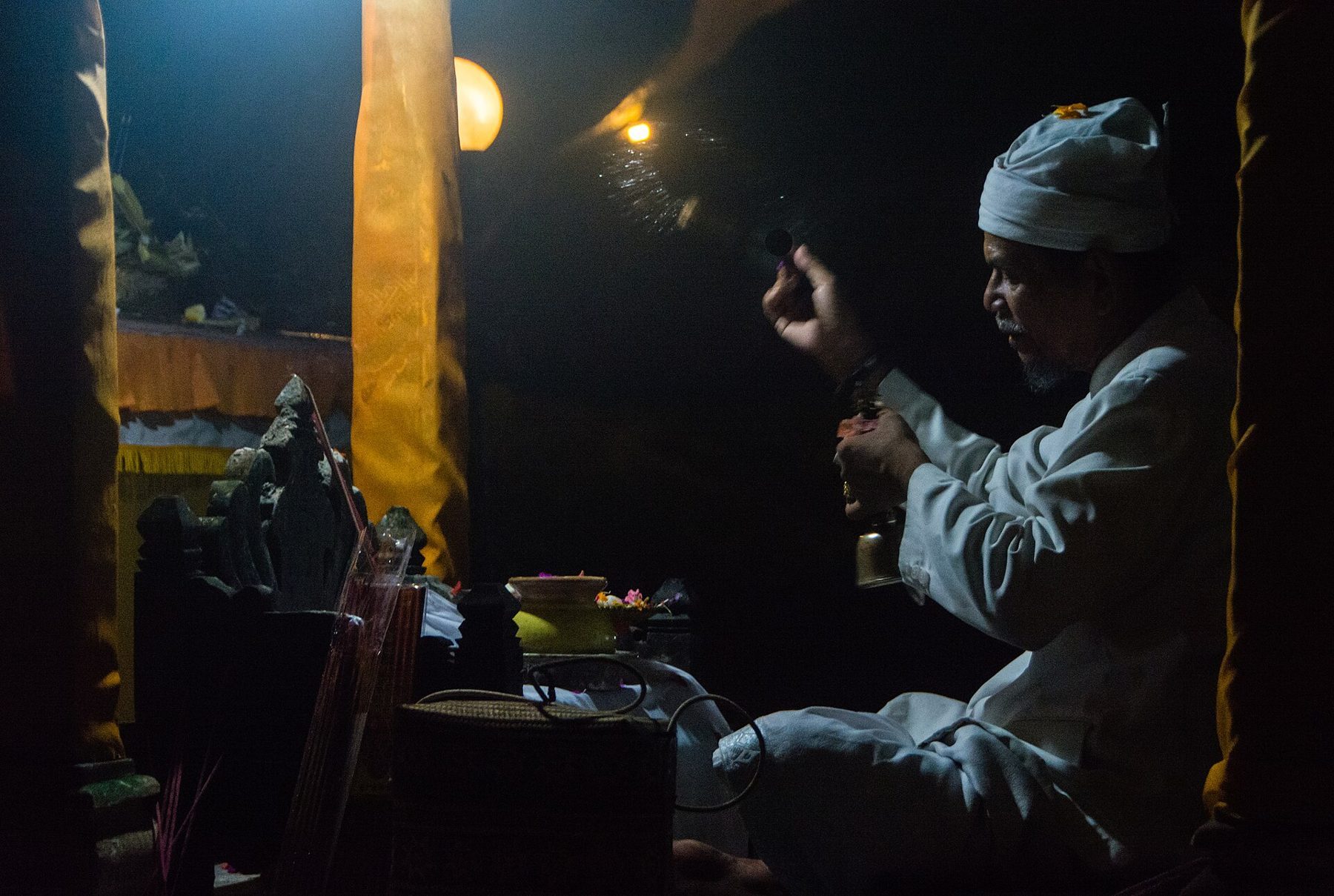
Visitors can ask to join a blessing. Nusapenida.org describes a full circuit of all six shrines taking about 2.5 hours, ending with a red, white and black Trimurti bracelet and a short Buddhist rite. A small donation to the priest afterwards is customary.
Fee and opening hours
Bring cash. Nusapenida.org reported a fixed Rp50,000 per person in June 2026, replacing the old free-donation system. detikBali listed Rp10,000 per person plus a small parking charge in July 2024, so check the amount at the entrance. Goa Giri Putri isn’t one of Klungkung’s OGOD ticket sites; our guide to the levy and attraction fees explains which ones are.
Nusapenida.org gives opening hours of about 7 am to 5 pm daily. Early morning is cooler and usually quieter.
Who should skip it
Choose another stop if you can’t crouch or climb stairs, if tight spaces make you panic, or if you’re menstruating. If you bring children, keep them close in the dark sections and near people praying.
Combine it with the east coast
Goa Giri Putri fits at the start of an east-coast day. On Nusapenida.org’s east tour, visitors leave the temple around 10:45 am and reach Diamond Beach around 11:30 am, then spend the afternoon at Atuh Beach and Thousand Islands Viewpoint. Our one-day east itinerary helps you choose which beach to add.
Continue planning
Where to go next
Research notes
Sources and verification
Check current boat times, prices and conditions before you go.
We used the sources below. We haven't recorded an on-site check, so ask locally about current access and facilities.
- detikBali - Pura Goa Giri Putri history, location, hours and tickets (July 2024) Source checked Oct 13, 2026
- Winanti and Nerawati (2023), The Existence of Goa Giri Putri Temple in Nusa Penida Klungkung, UHN I Gusti Bagus Sugriwa Source checked Oct 13, 2026
- Kulturistik journal - Hindu and Buddhist culture at Pura Goa Giri Putri Source checked Oct 13, 2026
- Blaise Jaeger's Goa Giri Putri guide, Nusapenida.org (June 2026) Source checked Oct 13, 2026
- Nusapenida.org east-coast day timings (updated September 2026) Source checked Oct 13, 2026
- The World Travel Guy - visiting Goa Giri Putri cave temple Source checked Oct 13, 2026
- Antara Bali - Bali Governor's Circular 4/2023 rules for foreign visitors at sacred sites Source checked Oct 13, 2026