

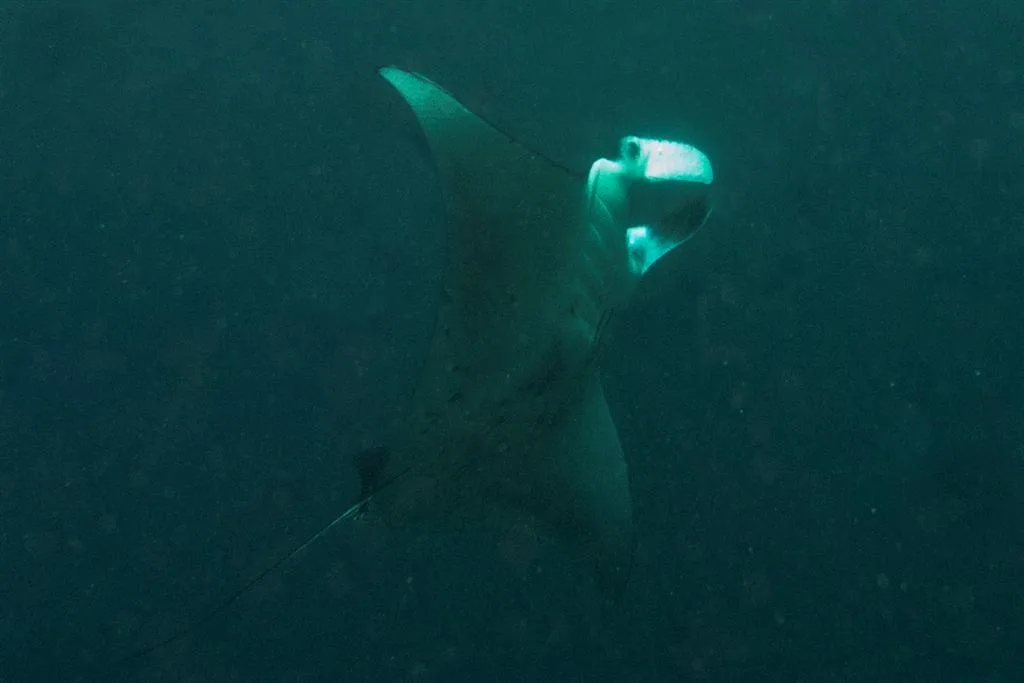
In this guideMantas at a cleaning station
Mantas at a cleaning station
Manta Point is a shallow bay below the limestone cliffs on Nusa Penida’s south-west coast, in Batukandik village. Locals used to call the site Batu Lumbung, after a rock nearby. Reef mantas come here to be cleaned: small fish pick parasites off their skin while they hover over the rocks. A 2019 study of 624 mantas in the marine park found they use this site mainly for cleaning and courtship.
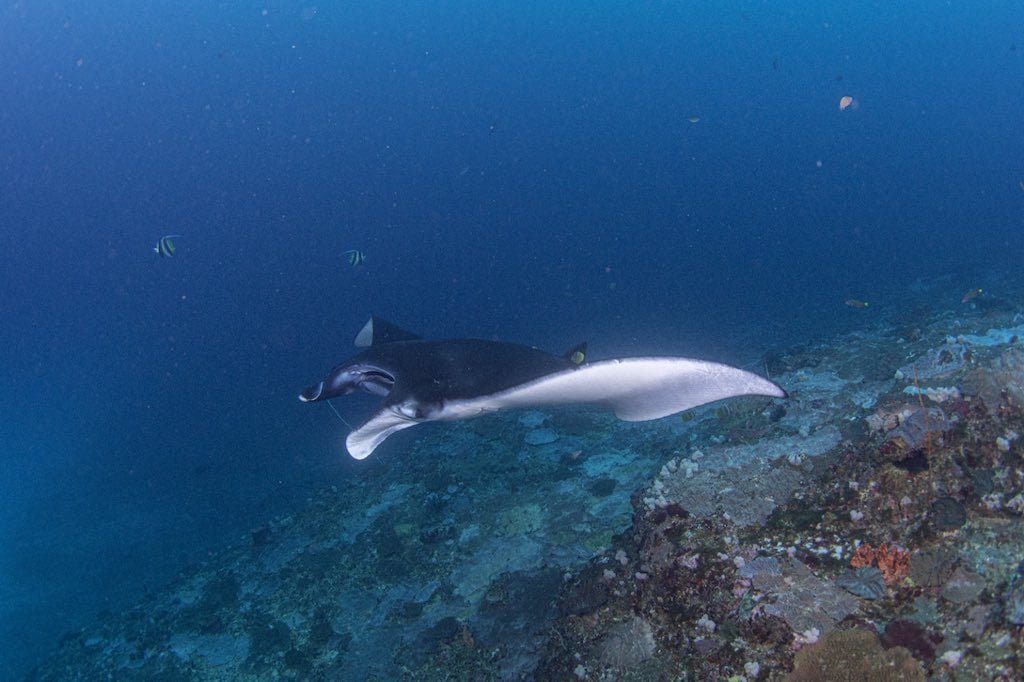
Bali’s 2017 marine park management plan describes groups of about 4 to 12 mantas here, present all year. The cleaning station is about 5 to 10 m deep, and the reef is mostly soft coral on boulders, so the mantas are the reason to come.
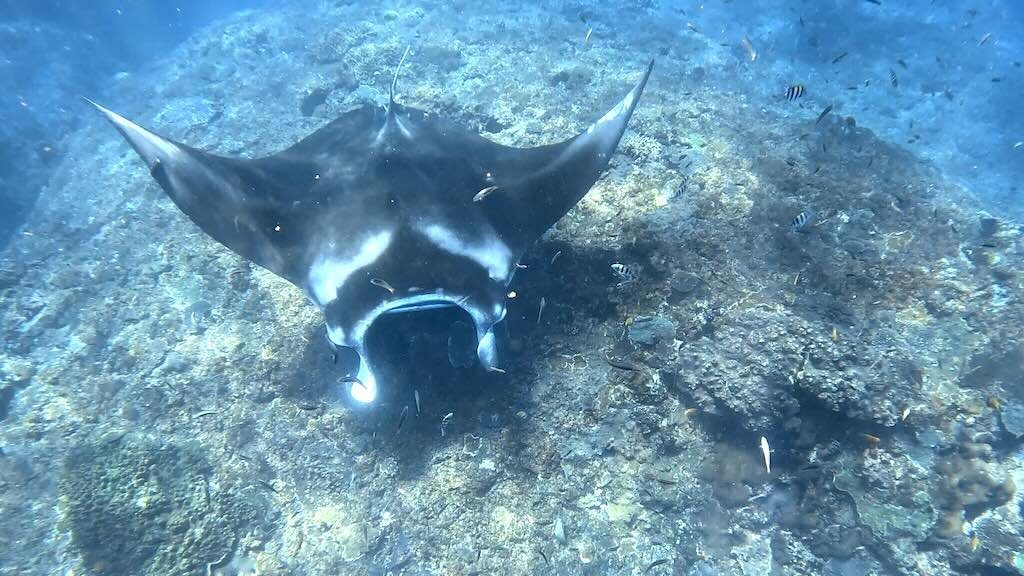
As a snorkeler, you float at the surface and look down while mantas circle the rocks. Blaise Jaeger of Nusapenida.org sums it up well: you see the whole animal, but from one angle only.
Getting there by boat
There’s no way into the water from land. You can sometimes spot mantas from the clifftop near Peguyangan, but only from above.
From Toyapakeh, boats follow the west coast past Crystal Bay, Kelingking and Broken Beach, about 45 minutes each way. Blaise describes it as the slower, more sheltered run. Trips from Sanur use bigger boats that cross the strait and head straight there. Boats from Nusa Lembongan visit too.
Ask exactly where your boat leaves from before booking a driver. Visit Penida’s shared Manta Point snorkeling trip plans Manta Point, Gamat Bay and Turtle Point, with hotel pickup on Nusa Penida or a meeting point that Made sends.
Limited-time offer through (Bali time): our three-stop Manta Point trip costs IDR 400,000/person, with a shared boat, snorkeling gear and some videos from the boat guide. Rate confirmed on . See the stops and booking terms for Manta Point Snorkeling: 3 Spots.
Rough seas can change the stop
Manta Point faces the open Indian Ocean. Blaise describes the current as generally mild but says swell and surge are common, with visibility of about 10 to 20 m. Emperor Divers says strong currents and big waves mean the site isn’t always accessible, and a July 2026 account of a Sanur trip describes high waves sending the boat to other stops instead.
Accept the guide’s call if they shorten the stop or skip it. Check the BMKG marine forecast for Nusa Penida Harbour the day before: it shows wave height, wind, current and tide. In the water, signal the guide or boat as soon as you feel tired or sick.
Who should skip it
Skip Manta Point if you can’t swim confidently in open water, or if boats make you very sick. You get in from the boat, often in swell, after a long ride. If you get seasick, take medication before you board. If you still want to snorkel, tell the guide before you get in, ask for a life jacket and stay beside the guide.
If reefs matter more to you than mantas, Gamat Bay is a shorter boat ride to a sheltered coral plateau. Many shared trips include both.
How to behave around mantas
The Manta Trust’s guidance for swimmers is simple:
- Get in quietly, at least 10 m from the manta.
- Don’t approach closer than 3 m. Stay still and let the manta come to you.
- Approach from the side and leave its path ahead clear.
- Don’t chase a manta as it swims past, and never touch one.
- Keep your fins under the surface so you don’t splash.
The code of conduct in the marine park’s 2017 plan adds local rules. Keep 3 m from a manta that’s being cleaned and about 10 m from one swimming freely. Stay 3 m from the cleaning rock, a rule that applies to snorkelers too. Don’t feed mantas or use a camera flash. Mantas have been fully protected in Indonesia since 2014.
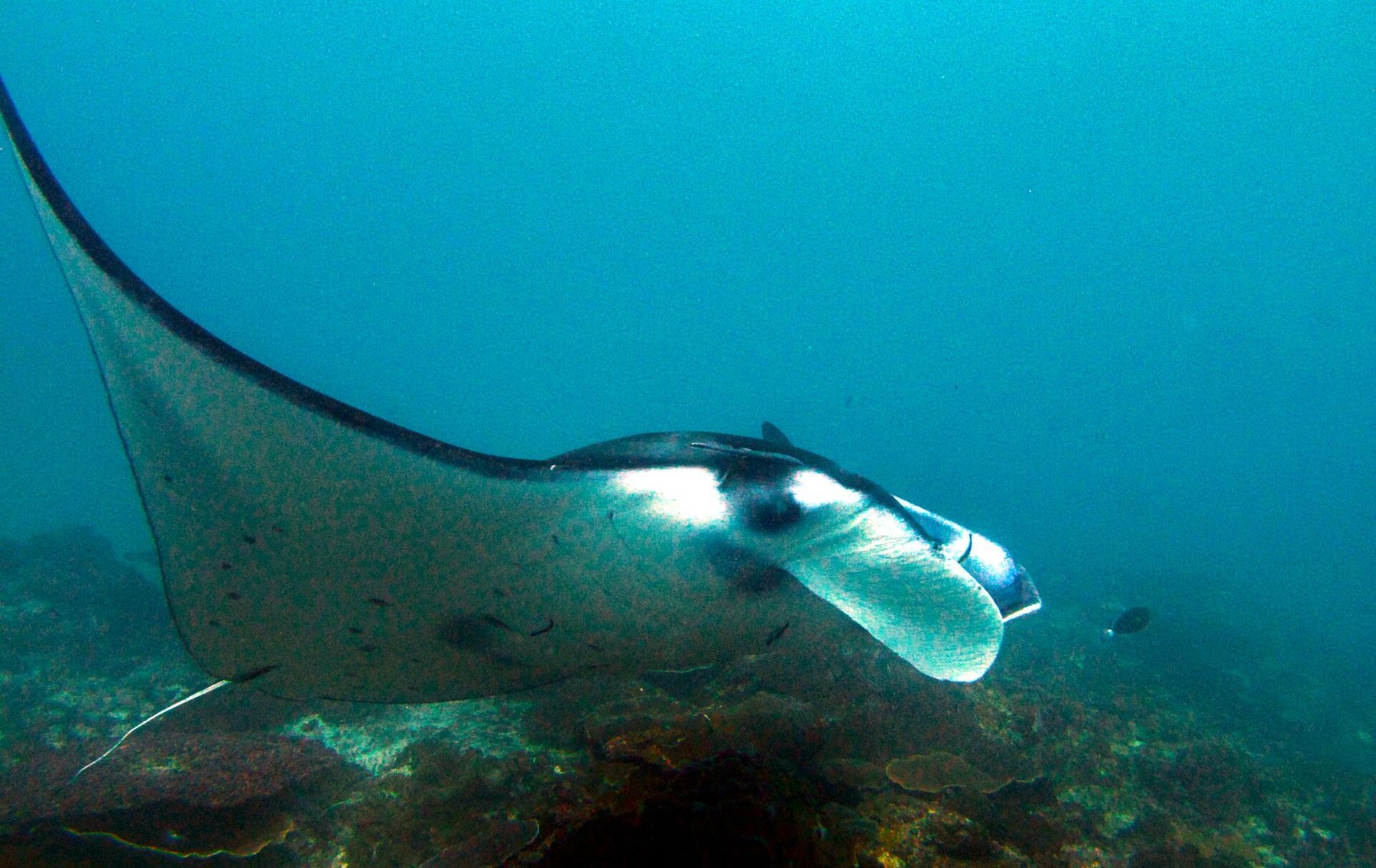
Manta Point is busy: the 2019 study counted an average of 13.4 boats there in 2017, up from 5.3 in 2012, and found the codes of conduct weren’t strictly enforced. Choose a guide who explains them before you get in.
The marine park and fees
Manta Point is part of the Nusa Penida Marine Protected Area (KKP Nusa Penida), about 20,057 ha of sea around Penida, Lembongan and Ceningan. The 2017 zoning plan makes it a marine tourism sub-zone, where boats shouldn’t anchor.
The plan proposed a visitor fee for the marine park, but we haven’t found one published by the authorities. Some Bali operators ask for a conservation fee in cash on the day, so ask what your trip includes. See our entrance fees and tourist levy guide for the island’s other charges.
When to go
Mantas use the site all year. In the 2019 study, sightings roughly doubled in May, and boat numbers were highest from April to October, peaking in May and September. Blaise notes the cleaning station is busiest around midday, and that going early in the morning or later in the afternoon makes a real difference.
Mola mola appear mostly from about July to October, but they’re a deep-water sighting for divers. Don’t expect one while snorkeling.
How a typical trip runs
Shared trips combine Manta Point with calmer reef stops, and the guide chooses the order on the day. Expect a briefing and gear fitting, the ride along the coast, then time in the water at each stop. A Sanur trip takes longer: one 2026 listing gives about 6 hours in total.
Before you get in, ask the guide:
- Where do we get in and out, and how long do we stay?
- Where should I stay in relation to you and the mantas?
- What should I do if I lose the group or the swell gets bigger?
- Is there a life jacket in my size?
Plan your stay
Give the trip its own half day rather than squeezing it between a morning boat from Bali and a land tour. The 5D4N itinerary leaves room for a second try if the sea cancels the first. Compare places to stay and check the weather close to your trip.
Continue planning
More snorkeling guides
Research notes
Sources and verification
Check current boat times, prices and conditions before you go.
We used the sources below. We haven't recorded an on-site check, so ask locally about current access and facilities.
- Blaise Jaeger's Manta Point dive and snorkel guide (Nusapenida.org, updated 4 September 2026) Source checked Oct 13, 2026
- Germanov et al. (2019), reef manta rays in the Nusa Penida Marine Protected Area, Frontiers in Marine Science Source checked Oct 13, 2026
- Manta Trust, How to Swim with Manta Rays Source checked Oct 13, 2026
- Bali Marine Affairs and Fisheries Office, KKP Nusa Penida management and zoning plan (2017) Source checked Oct 13, 2026
- Emperor Divers, Nusa Lembongan and Nusa Penida dive sites Source checked Oct 13, 2026
- Bali Travel Life, Sanur snorkeling trip to Manta Point (July 2026) Source checked Oct 13, 2026
- BMKG marine forecast for Nusa Penida Harbour Source checked Oct 13, 2026