
Editorial
Calonarang by Banjar Kangin in Sakti, Nusa Penida
 By Made Bhisma
Published:
Facts reviewed:
In this guideA night with my family’s banjar
A night with my family’s banjar
On Wednesday night, 14 October 2026, Banjar Kangin in Sakti village, on Nusa Penida’s west coast, staged a Calonarang. A banjar is a neighbourhood community, and Banjar Kangin is my family’s. It organised the performance for the piodalan, the temple anniversary, of Pura Dalem Desa Sakti. The anniversary fell on Buda Cemeng Klawu, a day in the 210-day Balinese calendar.
The performance took place in the village wantilan, the open-sided pavilion where Sakti gathers. It began at about 9 pm and finished at about 1 am.
Almost everyone in these photos is family: cousins, uncles and aunts. Rangda was danced by my cousin, Bli Nik.
The sisya dance opens the night
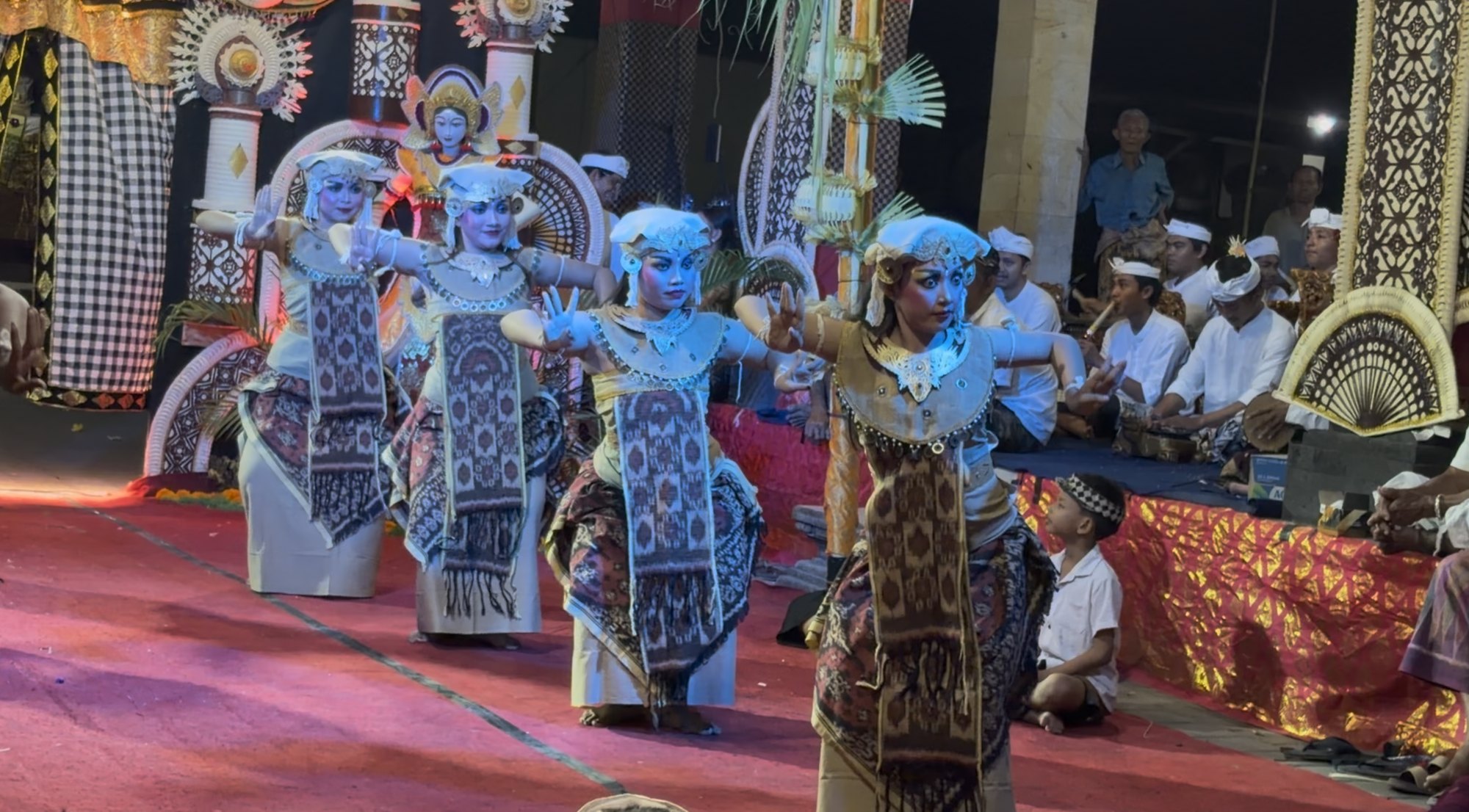
After the gamelan’s opening piece, the first dance was the sisya. Sisya means disciples: in the Calonarang story, they are the students of Ni Calonarang.
A 2018 study of Calonarang by Komang Indra Wirawan describes the sisya dance as building the night’s magical, mystical atmosphere. It links the dance to a scene in the Calonarang text where the disciples dance in a graveyard.
In the photo at the top, four dancers move in a diagonal line in white head cloths and woven textiles. Look past them and you’ll see the gamelan players in white, and a boy sitting at the edge of the stage to watch.
The sekaa gong
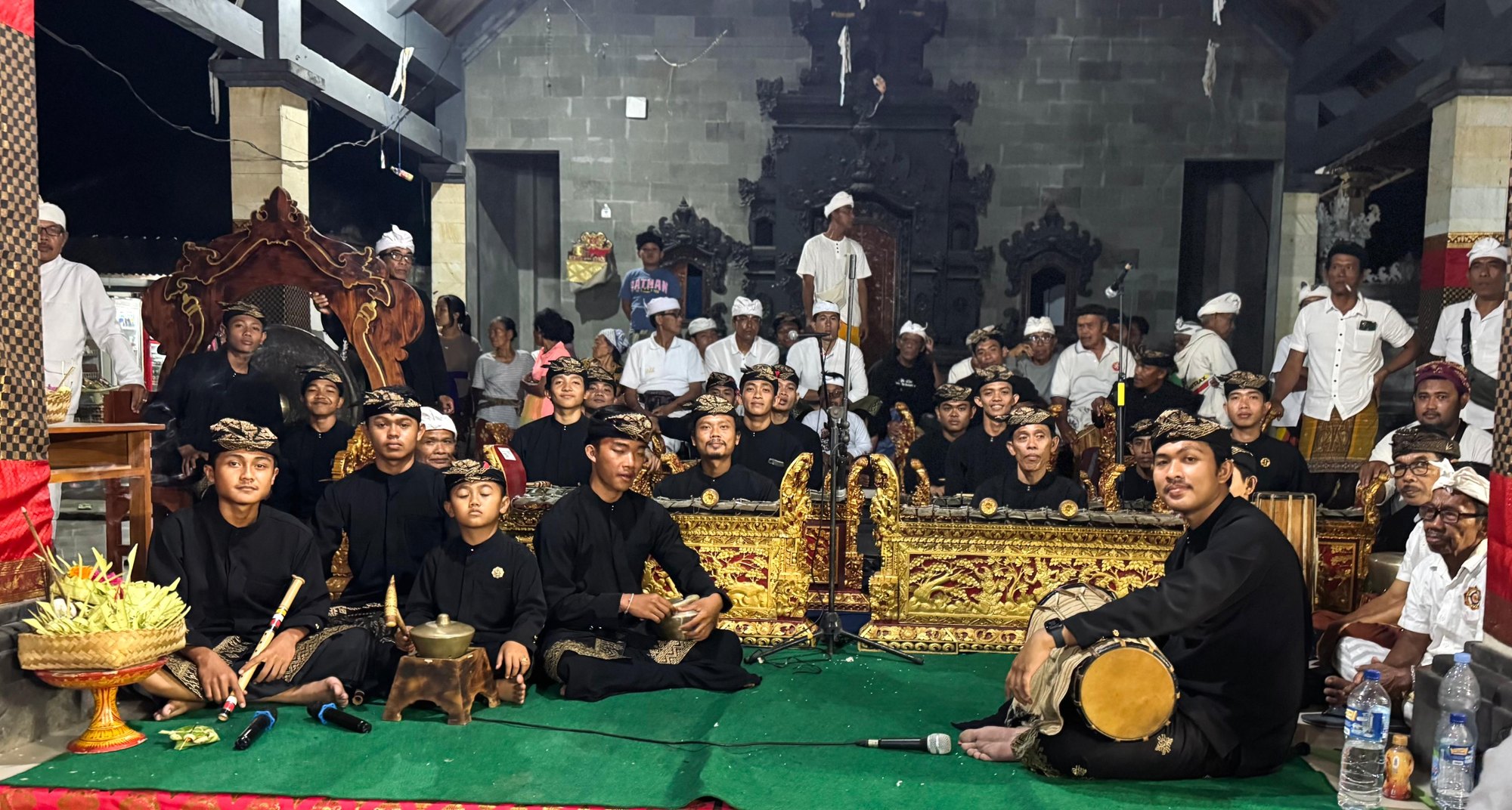
The sekaa gong is the gamelan group, and it carried the music of the night, starting with the opening piece before the sisya dance. The players wore black jackets and gold-patterned head cloths and sat behind gilded instruments, with a drummer at the front and a suling (bamboo flute) player on the left. Villagers in white temple dress stood behind them.
Look at the front row: one of the players is still a boy, sitting right beside the grown-ups.
What Calonarang is
Calonarang is a dance drama with Rangda at its centre. According to I Made Suta’s 2009 study in Mudra, the story came from Java and is set in the reign of King Airlangga in East Java, and it exists in many versions.
The same study ties Calonarang closely to the Pura Dalem, and gives three reasons it’s staged: to mark a Pura Dalem’s anniversary, to ward off misfortune and to pass on history while entertaining the village. That’s why the Sakti performance belonged to the Pura Dalem piodalan. It is part of a ceremony, not a show put on for visitors.
Suta also describes scenes that test strength and invulnerability, such as performers trying to stab Rangda with sharp weapons, or someone playing a corpse (bangke-bangkean). Be ready for intense moments if you watch one.
Rangda, danced by Bli Nik
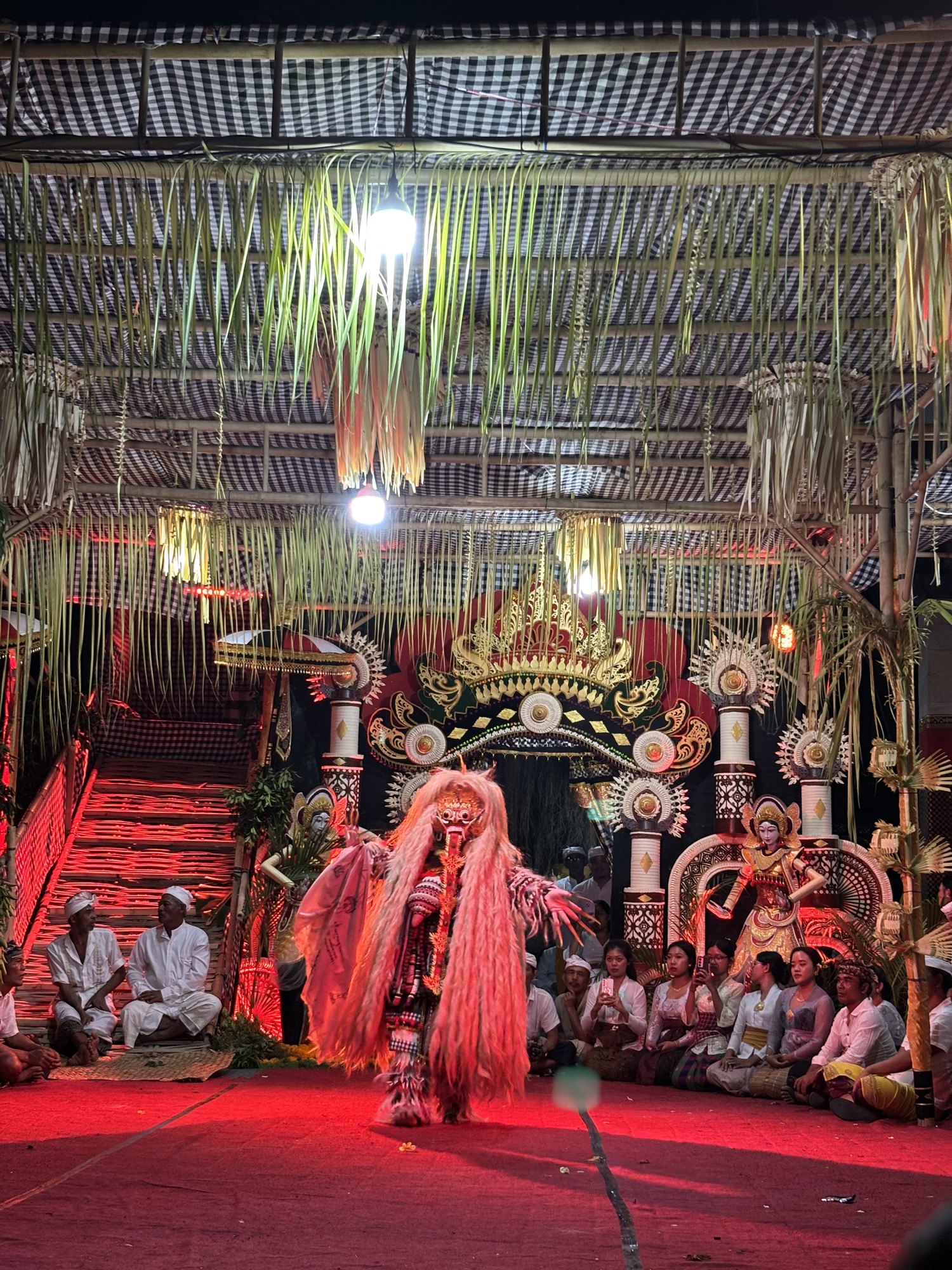
Rangda arrives with long pale hair, bulging eyes and a long tongue. Under the mask that night was my cousin, Bli Nik, and I’m proud it was him.
The stage in the wantilan
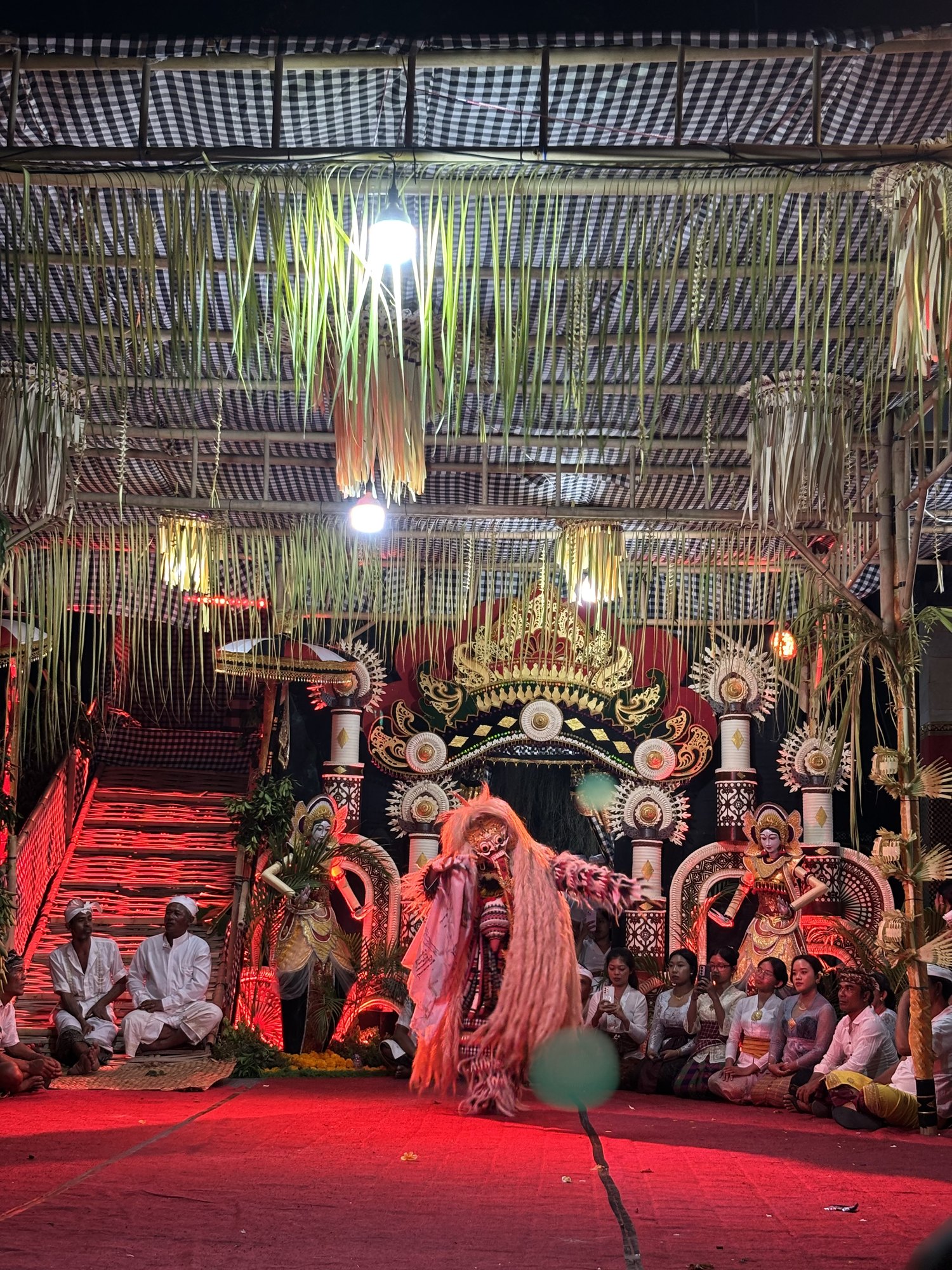
Strips of young palm leaf hung from a roof of black-and-white checked cloth, and an ornate gateway decoration stood at the back of the stage. Men in white temple dress sat to one side, and villagers sat close around the red carpet that marked the performance area.
How to watch a Calonarang respectfully
Respectful visitors are welcome, as they were in Sakti on 14 October. Bali’s 2023 governor circular asks visitors to wear appropriate clothing and behave politely at sacred places. At a Calonarang, that means:
- Wear a sarong and sash. A kamen (sarong) and selendang (sash) tied at the waist, with your shoulders covered. Bring your own.
- Sit where you’re shown. Follow the pecalang, the village guards, or the residents around you. Keep off the performance area and don’t walk across it.
- Photograph from your seat. No flash, and keep your phone low so the people behind you can see. Ask before taking close photos of priests or offerings.
- Leave sacred things alone. Don’t touch masks, offerings or decorations, and step around offerings on the ground.
- Stay calm in the intense scenes. Stay seated, keep children beside you and do what the guards ask.
- Plan for a late night. Eat beforehand, bring water and arrange your ride back before you go. In Sakti the performance ended around 1 am.
Finding a Calonarang on Nusa Penida
There’s no public schedule for Calonarang on Nusa Penida. Temple anniversaries follow the Balinese calendar, and the village decides when a Calonarang is part of one. Ask your hotel or driver during your stay whether a ceremony is coming up, and whether visitors can attend.
Sakti is the village around Crystal Bay, so staying there puts you close to village life on the west coast. My family’s merajan (family temple) is in Sakti too, and nights like this one are a big part of why I want you to see more of Nusa Penida than its viewpoints.
Continue planning
More travel guides
Research notes
Sources and verification
Check current boat times, prices and conditions before you go.
- Made Bhisma's account of the Banjar Kangin Calonarang, 14 October 2026
Made Bhisma attended the Calonarang at the Desa Sakti wantilan on the night of 14 October 2026 and shared these details on 15 October 2026, with four photographs from the night, of the sisya dancers by Ayu Manik, Rangda on the stage by Ayu Mas (two photos) and the sekaa gong by Made Surya. Banjar Kangin organised the performance for the piodalan (temple anniversary) of Pura Dalem Desa Sakti on Buda Cemeng Klawu. It ran from about 21:00 to 01:00 WITA. The sisya dance was the first dance after the opening gamelan piece. Rangda was danced by his cousin Bli Nik. Respectful visitors wearing traditional dress are welcome. He asked for no other performers or audience members to be named.
Reported by Made Bhisma
Report confirmed Oct 15, 2026 - I Made Suta, Pementasan Barong dan Rangda dalam Perspektif Estetika dan Pendidikan Agama, Mudra, 2009 Source checked Oct 15, 2026
- Komang Indra Wirawan, Taksu dalam Dramatari Calonarang, Widyadari, 2018 Source checked Oct 15, 2026
- The Jakarta Post on Bali Governor Circular No. 4 of 2023, dos and don'ts for visitors Source checked Oct 15, 2026